Beginner's Guide to UK Coastal Sailing: Tides, Wind and Safety
Beginner's Guide to UK Coastal Sailing: Tides, Wind and Safety
The first time you leave a sheltered harbour and feel the swell lift the bow, coastal sailing stops being theory and becomes a set of decisions. Most of them come down to three questions: what is the tide doing, where is the wind coming from, and is everyone aboard ready for both?
Get those roughly right and a day on the UK coast is hard to beat. Get them wrong and it becomes hard work very quickly.
Tides decide your day
The tide sets the shape of everything else: when you can leave, which way you will be pushed once you are out, and how much water sits under the keel when you arrive. High water comes roughly twice a day, about six hours apart, but the range varies enormously. Some bays see a metre or two between high and low; parts of the Bristol Channel and the Solent see several times that. A metre of tide at a shallow harbour entrance is the difference between a relaxed departure and a wait on the pontoon.
Chart soundings are measured from chart datum, roughly the lowest level the tide is expected to fall. So the number printed is close to the least water you can expect, not the depth right now. Add the height of tide, then subtract a sensible margin for swell, your own draught and the odd unmarked patch of sand.
For a beginner, the practical trick is to write the day backwards. Choose your destination, look up high water at a standard port, then work out the latest safe arrival and the earliest safe departure. If the entrance dries or has a bar, those two times often dictate everything else: when you leave, where you anchor for lunch, and whether you can get back into your own marina on the same tide. A passage that looks short on the chart can become a long afternoon if you spend two hours waiting for water.
Rule of twelfths
A rough but genuinely useful way to guess how fast the water moves: in the first hour after low water the level rises about one twelfth of the range, two twelfths in the second hour, three in the third, three in the fourth, two in the fifth and one in the sixth. It is not exact, but it beats guessing whether you can cross a bar or enter a drying harbour.
Use it with caution. Wind direction and atmospheric pressure change the height and timing of the tide. A strong onshore wind can push water into an estuary and raise the level; sustained high pressure can flatten it. In narrow channels, the stream may turn before high or low water, not after. The rule is a planning tool, not a promise.
Streams and tidal gates
The tide also runs sideways, and this is what catches out newcomers. Around headlands, in estuary mouths and through sounds, the stream can push faster than a small boat sails in light airs. Tidal stream atlases and the diamonds printed on charts give direction and rate for each hour of the tide, usually referenced to a standard port. Some passages have a gate: catch the favourable stream and you are through in three hours; miss it and the same leg takes six.
Off Portland Bill, the tidal stream can reach several knots. Around the North Foreland or the entrance to the Solent, timing matters just as much. A small yacht making four knots through the water may make seven over the ground with a fair stream, or barely one against it. That difference is not just comfort; it is safety margin. If the wind drops and the stream is against you, you may not be able to hold your course.
Plan gates with the state of the tide in mind. Spring tides run harder than neap tides, sometimes by a factor of two. If in doubt, leave earlier, carry more fuel, and have a bolt-hole in mind.
Wind: what the forecast actually means
Start with the area forecast, not the app’s single number. In the UK, the shipping forecast and inshore waters forecast give wind direction, speed, gust potential, sea state and weather. Read the trend: is the wind veering or backing, building or easing? A forecast of “force 4 to 5, occasionally 6” means you should be ready for six, not four. Gusts matter more than average wind, especially near cliffs, headlands and harbour entrances where the wind bends and accelerates.
Learn the difference between true wind and apparent wind. True wind is what the forecast describes; apparent wind is what you feel on board, a combination of true wind and the wind created by your own motion. Close-hauled, the apparent wind moves forward and feels stronger. Running downwind, it feels lighter. This matters when you reef: it is easy to underestimate the true wind when you are sailing fast, then get caught when you turn upwind.
Also consider sea breeze. On a warm, settled day, the land heats faster than the sea, and by late morning a cool breeze can build from the sea toward the shore. Around the UK it can add ten to fifteen knots in the afternoon, then die at sunset. It can turn a gentle morning into a brisk, choppy afternoon, especially in shallow bays and estuaries.
Reef early, reef before you need to
One of the best habits in UK coastal sailing is to reef early. If you think you might need a reef, put it in. It is easier to shake out a reef in calm water than to tie one in while the boat is pressed and the crew is unsettled. Beginners often carry too much sail because the boat feels stable in the marina or at the start. Coastal sailing in the UK rarely rewards optimism with sails.
Sea state and shelter
Wind over tide is the classic UK rough-water recipe. When a fresh wind blows against a strong tidal stream, short, steep seas build quickly, especially in shallow water. The Needles, Portland Bill, the Swellies in Anglesey and many estuary mouths are examples. If wind opposes tide, either wait, choose a different route, or reduce sail and slow down. A boat that pounds into steep chop is not only uncomfortable; it stresses gear and crew.
Safety: the boring stuff that brings you home
Safety at sea is mostly preparation, not heroics. Before you leave, brief everyone on where the lifejackets are, how to use the VHF, what to do if someone goes overboard, and where the fire extinguishers and first-aid kit live. Wear a lifejacket or buoyancy aid, with a crotch strap, and clip on when working on deck in any sort of sea. In UK waters, cold shock and hypothermia are real risks even in summer.
Carry more than one way to call for help: a fixed or handheld VHF, a phone in a waterproof pouch, and ideally a PLB or EPIRB. Know the routine for a distress call and, just as important, for a routine radio check. The coastguard would much rather hear a calm “Pan Pan” early than a Mayday late. Check the weather before you go, but also check it while you are out. Conditions can change faster than a beginner expects.
Have a plan for crew. Seasickness flattens people quickly. Feed everyone before departure, keep them warm and dry, and give them a simple job. A cold, scared, vomiting crew member cannot help, and may become the emergency. If someone is struggling, shorten sail, head for shelter, or turn back. The best skippers are not the ones who press on; they are the ones who know when not to.
Pre-departure checklist
- Weather: inshore waters forecast, shipping forecast, wind against tide, sea state, visibility.
- Tides: high and low water, range, stream direction, tidal gates, height of tide at your destination.
- Boat: fuel, engine checks, sails, reefing lines, bilge, battery, navigation lights.
- Safety: lifejackets, harnesses, VHF, flares or electronic distress alerting, first aid, fire extinguishers.
- Crew: briefing, seasickness tablets, warm layers, food and water, who does what.
- Plan: route, waypoints, bail-out harbours, estimated timings, someone ashore who knows your plan.
If in doubt
Coastal sailing rewards humility. The sea does not care how good your boat looks in the marina; it cares whether you have left yourself a margin.
That margin might be an hour of tide, a reef in the main, a closer harbour, or simply deciding not to go. Beginners often think the goal is to complete the passage. The real goal is to come back with the boat, the crew and your confidence intact.
Putting it together: a simple day plan
Imagine a summer Saturday: you want to sail from a Solent marina to a bay ten miles west, lunch at anchor, and return before evening. First, check the tide. If the ebb runs west in the morning, you may get a fast passage out; the flood may help you home. But if the wind is light and the ebb is strong, you might arrive sooner than expected and struggle to beat back. Check the forecast: a force 3 southerly is lovely; a force 5 with gusts near a headland is a different day.
Leave with a reefing plan, even if you do not reef yet. Keep the chart and pilot book accessible. Note the bail-out harbours: a pub quay, a sheltered anchorage, a marina you can enter at any state of tide. Tell someone ashore when you expect to be back. As you sail, compare what you see with what you predicted: is the tide running when you expected? Is the wind shifting? Is the sea state matching the forecast? That feedback loop is how beginners become competent sailors.
UK coastal sailing is not about memorising every rule. It is about building a habit of asking three questions before every decision: what is the tide doing, where is the wind coming from, and is everyone aboard ready? Answer those honestly, and you will make good choices far more often than not. The rest is just practice, warm tea, and a healthy respect for the water.
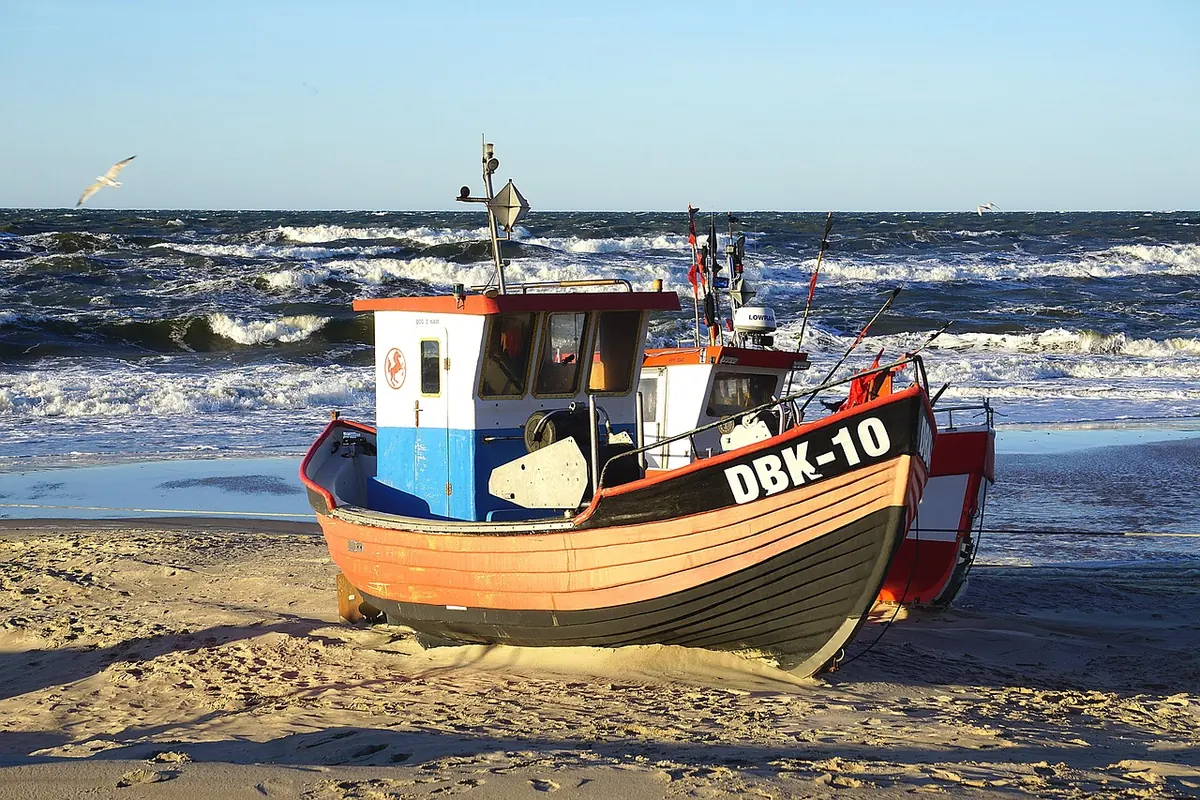
Photo: Andypoland / Pixabay